
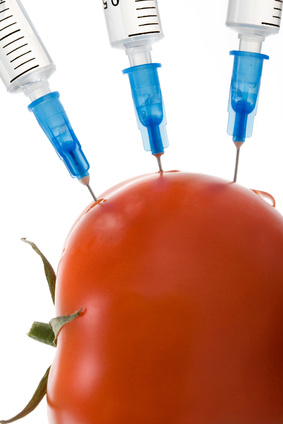
If you’re reading this blog, there’s a really good chance you’ve made the choice to improve your health, or at the very least, you’re considering doing so. Congratulations and good for you! You’ve taken the first step towards being healthier and more beautiful. In The Beauty Detox Solution, I outline a dietary plan that will allow you to achieve your best health. Still, it’s easy to be tempted by all kinds of foods that promise convenience, health, or great taste. And it’s okay to indulge every once in a while, provided you don’t make it a habit. Still, certain foods rise above others in terms of negative health consequences (why is my stool green, many ask me).
Here are seven of the top offenders and why you should never eat them.
1. Agave
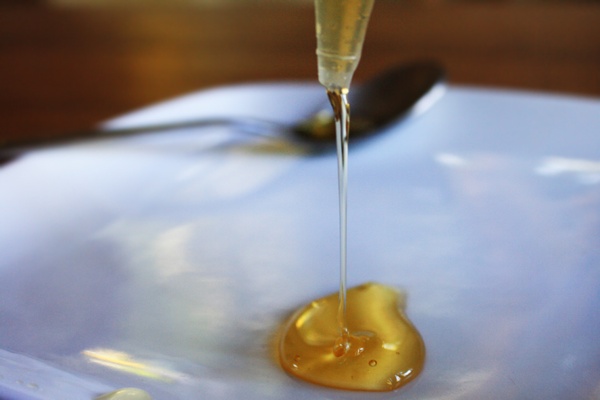 I talk a lot about agave, and it is one of the items I am most frequently asked about. Many people believe agave is a “healthy” sweetener because it is “natural” and marketed as being low-glycemic. In fact, agave is a highly processed sweetener. The chemical process for manufacturing agave nectar is nearly the same as the corn refiners using in making high-fructose corn syrup from corn starch. Using the agave glucose and inulin found in the plant’s roots, manufacturers subject it to a chemical enzymatic (using genetically modified enzymes) process that converts it into nearly pure fructose (70 percent or higher). Considering that HFCS contains only 55 percent fructose and it is currently wreaking havoc on Americans’ health, imagine what agave will do.
In the tiny amounts contained in fruit, fructose doesn’t cause much of a problem in the human body. In the large, concentrated amounts you find in agave, however, it can cause real health problems. That’s because the gastrointestinal tract doesn’t absorb fructose readily, so it goes straight to your liver. This places an overwhelming load on your liver, which can lead to scarring and development of triglycerides. It doesn’t stimulate the hormones that indicate satiety or fullness, so you can continue to eat it in large amounts. Fructose has also been strongly linked to obesity, fatty liver disease, and many other health issues.
Regardless of how “natural” and “organic” a label of agave nectar claims to be, don’t buy it. Fructose is found in fruit and honey, but it’s not found meant to be consumed in large, concentrated, syrup-like forms. While it is a low glycemic sweetener that won’t raise blood sugar, it’s toxic to your health in far more dangerous ways. Want more information? Here’s a link to a study in the Journal of Clinical Investigation about fructose.
Be sure to ask restaurants before deciding to eat there if they use agave- because if they do, there is a good change you’ll ingest it in dishes other than just desserts.
2. Corn-fed Beef
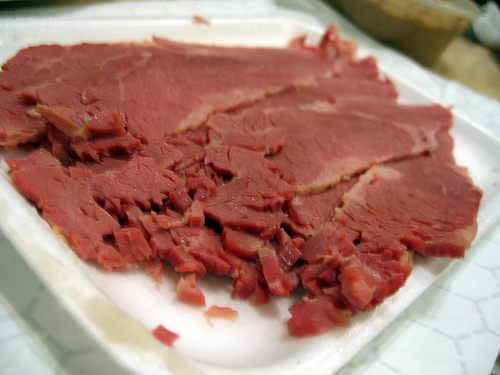 Most of the beef you find in a grocery store comes from corn-fed cattle. In fact, unless it is labeled as “grass-fed,” you can be pretty certain that the beef is, indeed, corn-fed.
Why is this a problem? Let’s start with the cattle. Cattle are ruminants. That is, they naturally survive on grasses, which their bodies are equipped to digest. Many ranchers have switched to feeding cattle corn and other grain-based diets because the feed is cheap and fattens the cattle quickly. Unfortunately, cattle cannot digest grains effectively, and feeding on corn makes them sick. Corn creates an acidic environment in the cows’ stomachs, and much like humans consuming acidic foods, this can cause all kinds of health problems for cattle, including the growth of E. coli 0157:H7, which can prove fatal to humans. Corn also makes the meat much fattier, containing higher levels of dangerous saturated fats than grass-fed beef, which is high in omega-3 fatty acids. Corn-fed cattle are fed a nutritionally inferior diet and they are thus, nutritionally inferior as food.
I personally avoid beef, but I know there are some people who do not want to give it up and I understand this. That’s why I recommend you develop a relationship with a small, local farmer that raises cattle naturally grazing them on pastures. The meat will be leaner, tastier, and healthier. Don’t know where to find grass-fed beef? Visit EatWild to find farmers in your area.
3. Genetically Modified Organisms (GMO)
 GMOs are now present in 75 to 80 percent of conventional processed food in the U.S., according to the Grocery Manufacturers Association. This information does not appear on food labels, so you never know if the foods eat are GMO unless you get them directly from the farmer and ask. Since our country has such a short history of eating GMOs, it amounts to a large public health experiment with you as the subject. Worst of all, President Bush (George Herbert Walker, not his son) signed an executive order stating that no safety studies are needed on GMOs because the food producer bears ultimate responsibility “for assuring safety.” Seriously?! In other words, the people making money from the GMOs are the ones responsible for determining its safety. No “approved” long-term studies have been done, and the industry is largely unregulated.
Independent rodent studies, on the other hand, show startling health effects in rats fed GMO foods including smaller organs, damaged immune systems, decreased immunity, liver atrophy, and many others.
4. Non-organic Corn
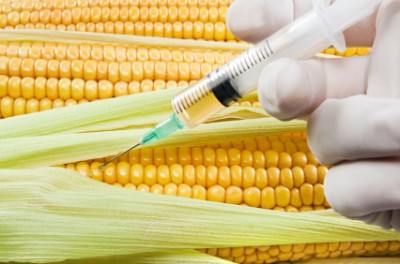 In the documentary movie, King Corn, two recent college graduates set out to farm an acre of corn, following it from planting all the way to market. What they discover is startling. Corn is the major ingredient in the processed Western diet. The two use genetically modified seeds and powerful herbicides. What they discovered is today’s mass-produced corn barely resembles the plant from which it came. It is nutritionally bankrupt, genetically modified (see above), tasteless, and chock full of pesticides. A little bit of organic corn is okay, but say no to non-organic corn in all of its forms.
5. Farmed Salmon
 Often called Atlantic Salmon, farmed salmon may be contaminated with dangerous levels of PCBs (polychlorinated biphenyl). These harmful chemicals penetrate the fat of the farm raised salmon (which is especially fatty), and have many negative effects on human health including nervous and endocrine system disruption, increased risks of cancer, immunosuppression, and reproductive problems. Crowded farms can also attract parasites and lethal fish diseases.
Farming salmon presents a danger to the environment as well. Farmed salmon that have escaped the farms have become invasive species that compete with and diminish wild populations of fish and contaminate the gene pool. Farms can also release toxins into surrounding waters.
Instead, try Pacific wild salmon.
6. Shrimp
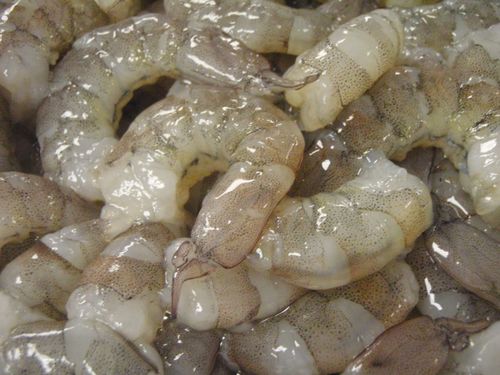 Shrimp from around the world is unhealthy and loaded with chemicals. Shrimp from outside the US may be high in antibiotics banned in the United States, such as chloramephnicol, which can cause aplastic anemia. Shrimp from the United States isn’t much better. It is very low quality and contains the highest levels of toxins in the world.
7. Cupcakes
The recent trend in baked goods is cupcakes. While they are definitely cute and look delicious, the typical store bought cupcake is filled with ingredients hazardous to your health. Polyunsaturated fats can cause inflammation and heart disease. Dairy is full of toxic hormones. Wheat is very likely genetically modified and contains gluten, which is very difficult to digest. Sugar has no nutritive value and raises blood glucose levels, stimulating the release of insulin as well as the formation of advanced glycation end products (AGE’s) which can damage skin collagen and lead to wrinkles, among many other issues. There’s really not a thing that’s good for you about cupcakes, which may also contain trans fats, artificial colors, and salt. So yes, they are cute but they certainly won’t make YOU look cute!
Remember it’s not just what you eat, but what you don’t eat! Avoid these 7 foods and your body will thank you. And never skimp out on your post workout snack, so you never give into cravings!
So farm raised from whole foods is not good?
It might be a good idea to ask a knowledgeable associate at Whole Foods about the regulations. They used to tell me that farmed is better than wild cause the wild fish could not be controlled in terms of what they consume…..which makes sense. I go with everything in moderation should be ok.
Farm Raised from anywhere is not good. If you actually saw those nasty nets with dirty birds hanging out over them you would NEVER eat them. The seagulls hang out over them and poop right in their containment systems do they are loaded with meds to keep them from being ill. It’s disgusting. And don’t trust whole foods, they sell a TON of GMO foods and don’t disclose it. They are also trying to block California from making it illegal to sell GMO foods without labeling it.
Liked the photo and made me curious!
thank you I’m on the right track already
es muy in por tante no comer chucolate
Hey Kimberly,
Can you be more specific about what types of agave you are referring to? Is there a difference if it’s raw, blue agave, or is there a type or procedure that extracts agave that is less processed? Or does all agave organic, raw or otherwise fit into the process you explain?
Thank you very much.
Lindsey
Lindsay – I am referring to All Agave. Instead of using agave, you can use Raw Coconut Nectar or Stevia.
I use raw coconut nectar and I love it. No other sweeteners and no agave. Good article Kim!
Thanks for the tips…some of your recipes do call for Agave syrup-what do we use in lieu of the famous raw cacao truffles now? Raw honey?
what about gluten-free & dairy-free cupcakes?!
not all cupcakes are created equally….
They are often full of soy, cane sugar and other not so great ingredients. Maybe a treat for once and a great while- but I certainly wouldn’t have them as a regular dessert.
Is there any healthy cupcake recipe?
There are raw cupcake recipes all over the net. check it out!!! Here is an easy one! https://www.choosingraw.com/raw-vegan-carrot-cake-cupcakes/
These look amazing and I am definitely going to try them. Thank you for sharing the recipe Andie!
I liked the “7 Foods” Article and feel pretty good that I am already avoiding most of the foods you suggest but shrimp? Really? Isn’t there ANY shrimp that you consider safe enough to eat? would like to know more about GMOs although I don’t eat any processed foods.
Wow, great post. Yipes! Been okay on some of these, but are struggling with the cupcake habit I’ve had with Sprinkles. I know, I know! I knew it was bad but it’s good to know just how bad it is and have it on my NEVER list from here on.
Why is it though that when something’s forbidden I want it more?? Sick… :(
Hi Kim! When is your next book coming out?
My next book will be coming out in December!! I am working hard on it right now and it will have a lot of yummy recipes! :-)
I am so happy to hear that your next book will be out in December!! That just made my day!
thanks for the article, I notice where I live ,many people don’t put to much attention to the Food their buy. their buy what ever is cheap .
European Food Safety Agency is regulating in Europe anything with GMO, and Food with and without GMO must be labeld.
We have much stricter Rules enforced than the US.
GMO should be prohibeted.
Considering Cupcakes. If you bake yourself and use Coconut or Almondmilk instead of Cow milk and Whole Wheat Flour or an Alternative like Buckwheat and omit the Sugar ,I think there is nothing wrong with that.
There is a certified sustainable fishery of Oregon Pink shrimp from Oregon, and a certified spot prawn fishery from Alaska. I doubt very much whether these have higher toxin loads than many other seafoods, as they are not farmed, and they aren’t caught by dredging the way gulf shrimp are.
~Kate, Seafood watch program and marine educator.
I am wondering what to do about organic as it is being effected by GMO’s and Monsanto.
Just curious, after reading this article, what can we eat? This is a very serious question. I’ve already given up beef and pork and non organic potatoes and apples. I barely eat corn but now it looks like that’s gone to. Never been a fan of any fish but I do like crab legs and lobster. Still safe to eat? How ’bout oysters? How do I find out if something is GMO?
Help! I thought I knew a lot about food but I feel like I lost a bunch of ground after this article.
Thanks,
Jennifer
Thanks for the article! How can you find non-GMO’s?
Thanks for all the great info! I learn something new everyday with you!
What would you recommend instead of agave? We have been using agave on our sprouted pancakes…but after reading this article I tossed the agave.
Michele I recommend Raw Coconut Nectar or Stevia (Liquid or Powdered)
What about vegan cupcakes?
Loaded with gluten and/or soy usually, and tons of wrinkle-causing sugar.
I was doing great until that last one….cupcakes!!! I can’t resist a good homemade cupcake! I need to be stronger!!!
Hi Kim I have read your blog for more then year have your book and have followed the rules you recommend. In Novemer I have start to eat more raw goat cheese and organic eggs and organic fresh salmon after it I add grassfed lamb beef and organic turkey. I have limit my fruit intake to lemon and limes and avocado. After about 2 month I have felt heavy constipated (that I have never been before). So I came back to eat very light in the morning only green juice have avocado salad and some small sweet potato at lunch and have some raw goat cheese or organic salmon at dinner. I do not eat beef or lamb now and feel much lighter. What do you think about it?Many thanks for that.
I always advocate staying light in the morning, via my Light to Heavy Principle, so it sounds like you are experiencing first-hand how well it works.
Lamb and beef are very heavy and acidic, and I think it is great you have cut them out of your diet completely. xx
From my research, I found that GMO wheat is not yet used in the US.
What is your reference on GMO wheat?
Thank you, though I knew about 5 of them and have removed them from my diet long ago, I was one who thought Agave syrup was good and have the “organic” one in my cupboard. I also did not know about shrimp. Thank you
Regarding farm-raised fish (which I also avoid) – did you know that the labeling standards for fish are really pretty suspect? For example, fish can be labeled “wild” when they are hatched on a farm, released into “wild” waters, and re-caught? I was shocked to learn this, especially as someone to whom that label matters. I don’t know the right consumer decisions to make, but especially when it comes to seafood, the regulatory mechanisms are just not as stringent/transparent as they are with lang agriculture.
Hi kimberly!!!
The gluten-free rice bread I buy contains whole brown rice (not organic), rice flour, rice leaven, sunflower oil, salt, water. Are these ingredients ok?? I follow blossoming beauty fairly closely, but still just get so hungry at night sometimes. Is it ok to have veggie sticks and 1 slice of the rice bread w/ avocado late at night when I’m extra hungry? It does help me to not snack on sugary things like I use too. Also, when do you think I should start on radiant beauty? I’ve been doing blossoming beauty for about 4 months, except for 1 month I had the GGS for breakfast, but swapped back as the fruit seemed to intensify my sugar cravings – I’m assuming I still have a candida issue? Sugar seems to be the only bad habit I can’t kick. Any tips? Also, I would really like to know your opinion on reducing high copper levels.
Thank you very much.
Julia xo
Hi Julia, that bread sounds pretty decent, and is okay for snacking if you need something heavier- better that than a sugary or gluten-filled treat. Try to eat enough at dinner so you can reduce late night snacking though.
Try the GGS with green apple and stevia. xx
Hello Kimberly
What is your opinion of quorn meatless products? Are they healthy or unhealthy?
has anyone on here experienced weight gain when first starting on Beauty Detox diet? I’ve been doing it for a week and I’m heavier than before, I’m on Radiant beauty phase. Any suggestions are greatly appreciated.
Namste
Hi Irma,
Did you read where I speak of transitioning in the Beauty Detox Solution? Sometimes you retain water to neutralize acidity when you change your diet. Be sure you are not just changing the food you eat, but also using the cleansing methods I describe in chapter 6. xx
Thanks Kimberly, I’m so happy that I saw you on Good Morning LA a while back, I ordered your book right away… I’m 1/2 way through… I finally found what I have been looking for : )
What about BabyCakesNYC VEGAN BAKERY!!!
Great!
And that bakery uses agave and organic cane sugar, two ingredients I don’t recommend.
Hi Kimberly,
Your book and blog have turned my life around and even my husband is trying out some of the recipes after seeing my great results (lower weight, fewer pimples, but most of all less depression and anxiety).
I wanted to ask if you could write another book for pregnant women! I am expecting, and I had heard pregnant women should avoid dark, leafy greens while pregnant because of the vitamin K which can lead to blood clotting. Apparently, the risk of getting clots is higher while pregnant because of the hormones raging around. However, I credit your green smoothie and other green recipes with being able to conceive so quickly and feeling great. I am a little confused to say the least!
Also, there are so many books out there about healthy eating while pregnant, but most say consume a lot of dairy to help your baby develop strong bones etc. I haven’t had dairy for years and don’t plan to start, but I would LOVE it ( and so would my pregnant friends) if you could provide a healthy eating plan for each trimester since we are all debating what we should and shouldn’t eat! It’s a minefield!
Please, please, please write a book about nutrition while pregnant. There is so much misleading and contradictory information out there!
Thanks!
P.S. We would love some tips on safe stretch mark cream and how to reduce our huge cankles!
Hi Candace,
One day- maybe after I have a baby- which is quite a while away. :)
It is not necessary to eat dairy during pregnancy. There’s so much crazy stuff I hear about certain diets. Check out Dr. John McDougall’s book, The McDougall Program for Women, in the meantime.
And…congrats!! xx
I’m sure glad wine wasn’t on the list!
DJ – Yes I agree, I enjoy having a glass of good Organic sometimes!
HI Kimberly, am a little confused about Agave. Love the papaya & avacado salad but your recipe calls for agave. What would be a good substitute for the agave?
Thanks, Cindy
Cindy when the truth came out about Agave, I changed the recipe and now use Raw Coconut Nectar or Stevia (powdered or liquid)
I’m curious about the independent studies you mention related to GMOs. I’ve scoured pubmed (the scientific database from NIH) and cannot find much, if anything. Perhaps you can point me in the right direction? I’m a proponent of using GMO technology to solve the world’s very real food crisis, and I’m interested to understand why you dismiss this as an option.
a proponent of GMO technology? since this was replied in 2012 i hope you’ve done enough research to straighten things up.
get the facts: the world’s hunger problem is NOT caused by a LACK of food. But, instead caused by political agendas – countries between countries unwillingly to truly help each others’ out. Think why certain countries have more than enough food to toss out at every meal while certain countries continue to live in hunger? THERE ARE ENOUGH FOOD! Read yourself canada’s case in the past where they’d rather stored excess food in factories to rot instead of “donating” them to countries who need it purely for the sake of not lowering the prices of their produce.
What’s causing all our world’s problem is very simply because people are unwilling to genuinely help each other’s out. All these GMO, stem cells as well as other crap advances in technologies or breakthroughs in sciences are just problems created out of a problem resulting in even more problems.
Please wake up.
Hi Kim,
I was curious on your opinion about eating dried dates and figs as I just found out how high they are in fructose! What is your recommendation on these….
I am an athlete who eats around 3 dried figs and a couple dates prior to or during working out for quick energy….
Thanks!
Hilary Hamilton
Hi Hilary,
For athletes such as yourself, dried fruits are excellent for endurance and performance. Some research has shown that the high content of vitamin C and antioxidants in fruit neutralizes some of the harmful effects of the fructose. I personally loved figs and eat them in moderation, as well as use dates in some dessert recipes. They are not appropriate for those with candida, however. xx
Hi Kim,
My brother was diagnosed with alopecia and is now cleansing, but would still like to work out in the morning. He currently blends frozen fruit smoothies in the morning for his workouts… is frozen fruit a good source of energy for someone who is working out and cleansing?
thanks,
Janet
Kim – do all types of organic avocados have the same nutritional content? I’ve read that Florida avocados have a very high magnesium content; a lot higher than other types of avocados. Is there any specific type that you recommend?
Shrimp is one of my favorite foods so I was wondering if no shrimp at all is good for you? Are there any suggestions as to which are better? Thank you.
I am a cattle producer and the information about cattle being fed corn is not completely accurate. Ranchers do not feed their beef cattle corn because it is cheaper, in fact it is more expensive than finishing a steer on grass. Also, when you are feeding out cattle for butcher they are still getting the nutrients needed from grass through the forages, we feed brome grass/alfalfa 50/50 ration which means the hay is half brome grass and half alfalfa, that they are supplied.
I totally agree with you, thank you for this! My husband and I also raise beef cattle along with quarter horses and it is infuriating that people like this talk and they have no clue as to what actually happens!
I love her information but I think she got the cattle mixed up with the corn-fed deer lol ;P
Hi there I get my salmon from whole foods but it’s farm raised. Is it bad still even though it’s from whole foods? Thanks
Hi Kimberly!
I love your book, blog and website! I had a question for you regarding this diet (and my own). I’m severely intolerant to soy and dairy (but I’m a vegan so I don’t worry about that one ha), and I also notice that wheat makes me tired/break out so recently I stopped eating that too. I know in your book you don’t eat those products either, and I love that it’s a lifestyle book. I guess my question is can it be healthy for me to be a vegan that eats no soy/gluten for the rest of my life? I used to eat fish and eggs to have more options but I’d like to stay vegan. And any tips to make it a little easier? (I cook a lot and have a website about it, thatcutelittlevegan.com)
Thanks a bunch! You’re so inspirational, can’t wait for the next book :)
Did you know if corned beef is corn fed beef ?
It is the way it is cured?
No corned beef is flavored with spices. Corn fed beef is just regular beef!
reading your book finally and find it fascinating. why is it so important to drink only pure filtered non tap water? we’ve been drinking almost exclusively tap water for a long time now. thank you.
there’s no fluoride usually in filtered.non tap..bottled water…..so is there any recommendations on getting the fluoride other ways….to prevent tooth problems….in children and adults..
you lost me at cupcakes. I am a baker and well you lost me at cupcakes.
I think she is primarily talking about the store bought stuff. As a home baker I seriously doubt that you stock your home pantry with the likes of this: high Maltose Corn Syrup, Distilled Monoglycerides, Artificial Colors- Yellow #5 & 6 (and a zillion more), Polysorbate 60, Sodium Stearoyl Lactylate, Sodium Acid Pyrophosphate, Potassium Sorbate, BHA, BHT and lots more crap! Having said all that….while I do believe homemade cupcakes are wonderful, you’d have to admit…with butter, sugar, flour and the like…it’s fattening stuff!!!!
As shrimp is now off my menu, I just want to check if scallops are okay?
Hi Kimberly,
I’d like to suggest people read the book Wheat Belly, by William Davis M.D.
It makes you think about the foods the diet and “healthy heart” industry are
convincing people to eat. It’s very sad to think that we are all experiments in
some form or fashion.
Thanks.
Hi Kimberly,
I see that several other people have asked for more clarification on the shrimp issue, but I don’t see an answer. When I am at the beach in SC or FL, I like to eat locally caught shrimp bought directly from the shrimpers. Are you against all shrimp? Is locally caught wild shrimp ok? Beach season is rapidly approaching and if I have to give it up, I need to be forewarned, lol!
One problem I have with what you mentioned is GMO’s. Coming from a back ground of razing, eating, and researching GMO’s they are actually not bad for you. If you think about it Organic Food is very expensive and for many of us it is difficult to get these. Also, if you think about it many GMO foods are healthy and the same thing as any other fruit. They are a little different in that since the world is getting larger we need more food to feed people. GMO’s would not be on the market if they were not classified as safe and healthy foods. I have been born and raised on GMO’s and I am a 5’9″ female who weighs about 145 lbs. This is a healthy weight for me and I do eat healthy.
Hi Chea, please check out the blog devoted solely to GMO’s, which highlights many environmental as well as physiological issues associated with GMO foods.
Hey Kim! There ARE OTHER brands of agave such as clear organic agave from ultimate superfoods that are not processed in the way you mentioned. A lot of ‘brands’ were doing all the bad stuff you mentioned here but some are completely pure.www.superfoodsnacks.com/ingredients/clear-agave-nectar.
GMOs are labelled safe because they bypass the regulatory process that pretty much every other food has to go through to be recognized as safe. Also, if you’re gonna say that “shrimp” are unsafe, then I guess that makes any aquatic life found in the water with said “shrimp” unsafe too, right? Or are we talking about farmed shrimp?
Chia, have you researched this topic? GMO foods have been proven toxic to all animals that have been tested as well as the human body. Height and weight has little to do with true health. Especially dealing with inflammation in the body which leads to heart disease, diabetes and cancers in the body. Try to remember, ALL things that the FDA has pulled off the market deeming ‘unsafe by FDA standards’ was once ‘approved by FDA standards’. Organic foods are not expensive, especially compared to the long term, debilitating effects GMO, processed and chemical laced foods will have on you and your family. Try buying fresh foods in season and locally grown. It will take effort and it’s not always the answer to listen to the people who make a salary banking on your bad health.
Oh my goodness Chea. Unfortunately, that is why things such as GMOs are around in this country. There are so many folks such as you who make assumptions, and who have no technical or scientific knowledge of what they are talking about. I am a former research scientist, and I can assure you that GMOs are not harmless in too many ways that would take forever to go into here. But, go read what Kim suggested. It’s a start. Something else to consider. Whatever zeitgeist we are in, we are usually unaware of it, as the widespread practices that are in place today in our society are accepted by a large part, if not majority, of the population. This leads to the thinking that it must be okay, because it wouldn’t be done, otherwise. Not so at all. Back when women were not even considered “people”, suffragettes were jailed for protesting. The majority of the population thought they were crazy lawbreakers…including MANY OTHER WOMEN who didn’t understand why these women just couldn’t settle down and why they were so discontent with their lot in life.. My point is, you may think you’re okay, and maybe you are, for now, but you may building toward something awful that could finally manifest itself in your 50s or 60s in the form of a cancer, for example. Also, you may have extraordinarily great genes, which go far in offsetting damaging life habits, but most do not. Also, eating “healthy”? There is no way for anyone to know what that means to you. I have found that eating healthy means something different to everyone, and it’s a whole SPECTRUM of meaning. Lastly, you should know that just because your weight might be appropriate for your height, certainly does not make you healthy. It’s merely one piece of the puzzle.
GMOs are lab created foods, manufactured by an insecticide/herbicide company (Monsanto) . These “foods” have been outlawed in other countries but not in the US. Decide for yourself, but “organic” is suposed to be natural & without chemicals. GMOs have genetically modified to make them less susceptible to pest & require less water, but they have also removed nutrient that Monsanto considers to be toxic to humans.
I’ve searched your site and I want to know what I CAN eat. You write an awful lot about what we shouldn’t be eating, but can we focus on what we CAN eat instead? All this talk just annoys me and makes me feel like I need to toss my entire fridge out! x
Her book, The Beauty Detox Solution, includes ALOT of information on foods that are great for our bodies. With all the information we have access to on her blog, a great way to show support would be to pick up the book. It is very worth it.
Tianna:
I frequently wondered the same thing: what are the best things for me to eat. Then I found the blood-type diet, which was so informative to me. It is difficult for me to adhere to, but its a starting point. A very easy read, the book is called Eat Right for Your Type by Peter D’Adamo. Take a look!
Edna
Tianna, i’m with u. it’s not just this diet, it’s everything you hear, read, see, even on Dr. Oz. it’s getting so confusing u don’t know what to eat. i’m glad to hear some of the info, but there are so many conflicting studies & reports. No dairy No gluten No grains No sugar No white flours No corn No soy No red meat Eat organic Only grass fed beef No trans fats Eat low glycemic. Do we all have to be chemists? How do we know who to believe, or which study? I’m totally confused!!!
It can be overwhelming. There is way more stuff on your grocery store shelf that you shouldn’t eat vs stuff that you should. But don’t let it overwhelm you. Start small with the biggest problem…corn syrup. Read your food labels and cut tht out first then take out your next ingredient (corn for example or soy) and as you replace your condiments, try to look for organic and/ or GMO free alternatives, it won’t be so mind boggling.
You can also look for Wild Atlantic Salmon! It’s the least fishy tasting salmon! The way that section of the article was written, sounds like there isn’t any Wild Atlantic Salmon, When it’s by far the best! :)
Kim, Someone further up the comments here asked if Whole Foods farmed salmon was okay. You didn’t get to reply to that question. Every Whole Foods I go into pushes it and insists that THEIR farmed salmon is different because their suppliers are under contract ONLY with Whole Foods and they adhere to some strict standards that supposedly set them apart from their competitors. Trouble is, I don’t know what that means. I don’t know what they’re fed. I do see they are definitely fattier than the wild salmon, as well. If their diet isn’t any different or much different from other farmed salmon, I certainly will refuse to eat it. But, just curious if you know anything about the Whole Foods farmed salmon diet, or where one can find out. It is not on their site. I’m thinking of calling their corporate office.
Hi Kim! I think it’s great that people are becoming more aware of how foods affect our bodies. Like everything else, there are extremes. Yes, corn-fed cattle have more “marbleing” throughout the meat. I am happy to learn about the fructose levels in agave and will look to learn more.
Shrimp are bottom feeders, that means they eat all the crap in the ocean to keep things clean, so you may love shell fish but keep in mind they only eat sh*t,
Feeding the birds is a past time for some people. While you take a stroll with the kids or alone at the park, you may find it interesting to feed the birds. For some people feeding birds is a passion. Bird watchers are not only best at recognizing and naming birds, but also at the knowledge of bird food. Peanuts are most commonly used as bird food as it comes handy in the home kitchens.*
What about “organic agave insulin “? I bought organic Stevia, a Wholesome Sweeteners product, that contains that type of agave. Is this still harmful?
Another important thing to note is how much of the seed you are giving is actually just filler. Many less expensive feeds use a lot of filler, which the birds don’t generally eat and are basically a waste of money and can make a mess in your yard. Filler seeds include milo, sorghum, red millet and golden millet. Birds will push through these fillers to get the food they want, so it is more financially sound to choose one that is higher quality…
Yes! Finally someone writes about stretch marks treatments.
You can find grass fed, grass finished beef here: marxfoods.com, as well as wild pacific salmon. The beef is excellent and is free range from New Zealand.
You’ve made some decent points there. I checked on the internet to learn more about the issue and found most people will go along with your views on this website.
5. Farmed Salmon
Often called Atlantic Salmon…
farmed salmon can be either Pacific or Atlantic (distinct sub-species native to both oceans). But fish farmers prefer the Atlantic breed – so farmed salmon IS invariably Atlantic.
Also – PCB’s are a contaminant found in all ocean fish. However due to the FEED given farmed salmon, they tend to contain up to 10x the levels of wild salmon. Recent studies show these carcinogenic levels so high, its recommended to restrict intake to no more than once a month. (Notwithstanding all the OTHER reasons, that make farmed salmon a no-go all ’round as you state.)
I don’t see any references here to back up the information stated, not even responses to some simple comments made a year ago requesting them.
So while all of this seems logical based on the specifics given, there is no way to know if these specifics are correct. It would help people looking into the huge cluster of healthy food opinions out there (millions by now) if you provided references to where you have received your info.
I just like the helpful information you provide in your articles. I will bookmark your weblog and take a look at again right here frequently. I’m slightly certain I will be informed a lot of new stuff right right here! Good luck for the next!
Ya ok, what does one eat ? I cant afford to go to Whole Foods Market. Maybe the next article should be what to buy to eat if you are poor.
I completely understand Robert. Sometimes it seems that the organic, health food folks prey on the innocent just as those organic folks say traditional farmers, pharmaceuticals and traditional docs are poisoning us. Prices at the health food stores can be outrageous and prohibitive for most to be able to buy. Prices for traditional medicine, alternative medicine and insurance is even more expensive. It just seems like a problem across the board. God intended for us to consume plants. He gave us dominion over animals. He granted us the right to consume them if needed, but only during times of.cold and famine when fruits, veggies and leafy greens are not available. Go vegan…your body will exude the blessings of that decision. Be frugal and buy within your means. I personally shop at Aldis and Ruler Foods. What I cannot buy there, I go elsewhere. Pray over all you eat and serve your family. Prepare your food I’m peace, love and joy. That energy is cleansing to the food and more powerful than where you buy it from. What you need you will receive from it. Go with your own intuition. What is good for others may not be good for you.
I wanted to share this with friends, but my friends are nit-picking intellectuals and will likely become disinterested by the three grammatical errors I located in the first half of the article :-/
Also, couldn’t help but notice all except one of the reference links connect to other pages within this site, and not to any external resources to research study articles etc. I think it would be helpful to know how you are able to back up the claims being made. This is the only way to gain the trust of your average skeptic.
Other than that, I agree with everything that was stated here, but it is because of the research studies I have read outside of this site.
Comment *Your blog is a reflection of the compassionate soul behind the screen.
Thank you so much love! Happy New Year!! Xo